Agile HR Newsletter October 2024
Building Strong Company Values
Employee Training
Employee References
By Jenny Goulding, Hils Jackett, David Rogers & Chelsey Phillips
Table Of Contents
Building Strong Company Values
This is a key step in defining your business culture, guiding its decision-making, and shaping your unique identity. Values create a sense of purpose and alignment for employees, customers, and stakeholders. Here’s a process to help you build meaningful and authentic company values:

1. Start with Your Mission and Vision
- Mission: Reflect on the core purpose of your company—why does it exist? What problems does it solve, and what impact does it want to have on the world?
- Vision: Think about the future. Where do you want the company to be in 5 or 10 years? The vision should serve as an inspirational goal.
Your values should align with both the mission (what you do) and the vision (where you’re going).
2. Involve Your Leadership Team and Employees
- Leadership Input: Engage key leaders who understand the long-term strategy and culture you aim to build.
- Employee Feedback: Survey or discuss with employees what values they believe already exist within the company. These grassroots insights often reveal what people truly care about or feel motivated by in the workplace.
A collaborative approach ensures the values reflect the collective spirit of the company, not just the ideas of a few individuals.
3. Identify Core Behaviours and Priorities
Focus on behaviours that represent how your company conducts itself both internally and externally. Ask questions like:
- What principles guide decision-making?
- How should employees treat each other and customers?
- How does the company approach innovation, quality, or accountability?
Example core values:
- Integrity: Being honest and ethical in all dealings.
- Customer-centricity: Prioritizing the needs and satisfaction of customers.
- Innovation: Encouraging creativity and new solutions.
- Diversity and Inclusion: Valuing diverse perspectives and creating an inclusive environment.
- Sustainability: Committing to environmentally responsible practices.
4. Be Authentic and Avoid Generic Values
It’s easy to pick overused or trendy values like “excellence” or “innovation,” but those might not resonate with your company’s true spirit. Your values should be a reflection of who you are and what you aspire to become, not just words that sound good. Authentic values often come from what makes your company unique.
Example: If you’re a tech startup focused on rapid innovation, a value like “Speed over Perfection” might be more genuine than “Strive for Excellence.”
5. Make Values Actionable
Values should not be vague concepts; they need to be backed up by actionable behaviours. Define what living each value looks like on a day-to-day basis.
- Integrity: “We are transparent in our actions and communicate openly, even when it’s difficult.”
- Customer-Centric: “We always put ourselves in the customer’s shoes when making decisions.”
This helps employees understand how to embody the values in practical ways.
6. Keep the List Manageable
Aim for 3-7 values that are focused and easy to remember. Too many values can dilute their impact. Each value should be distinct and represent a core belief that everyone in the company can rally behind.
7. Test and Refine
Once you draft your values, test them:
- Do they resonate with employees and leadership?
- Are they clear and easy to understand?
- Will they stand the test of time?
After gathering feedback, refine the values to make sure they feel right and can be embedded into the culture.
8. Integrate Values into Company Practices
After defining your values, integrate them into various aspects of the organization:
- Hiring and Onboarding: Hire people whose personal values align with the company’s. Include values in job descriptions, interview questions, and onboarding processes.
- Performance Management: Use values as criteria in performance reviews and promotions. Reward employees who exemplify the company’s values.
- Communication and Branding: Incorporate values into your brand messaging, website, and customer interactions. Let them shape your company’s voice and image.
- Decision-Making: Ensure leaders use the values as a framework when making business decisions, especially during challenges or growth phases.
9. Lead by Example
Leaders must model the values consistently. When leaders embody the company’s values, employees are more likely to follow suit. Hypocrisy at the leadership level can undermine even the most well-crafted values.
10. Revisit and Evolve Over Time
As your company grows and evolves, your values may need to be revisited and refined. Ensure that your values remain relevant and aligned with your company’s mission and culture.
If you would like support to develop your business values through a workshop setting do drop me a line [email protected]
Employee Training– Legislation Update
The Worker Protection (Amendment of Equality Act 2010) Act 2023 introduces vital changes for UK SMEs, reinforcing their responsibility to prevent workplace harassment. As a trusted HR partner, Agile HR is here to help businesses comply with these changes through strategic support, training, and policy updates.
Key Implications for SMEs:
- Increased Employer Liability for Third-Party Harassment
Under the new legislation, employers are now accountable for harassment of employees by third parties, such as customers or clients. This reintroduces a duty that was previously removed from the Equality Act. Businesses need to take proactive measures to reduce the risk of external harassment.
- Up to 25% Uplift in Compensation for Non-Compliance
If an employer fails to take reasonable steps to prevent harassment, tribunals can impose an uplift in compensation awards by up to 25%. This could cover claims of injury to feelings, financial loss, and even personal injury resulting from severe cases of harassment. This makes it critical for SMEs to ensure policies and preventive measures are up-to-date and effective.
- Proactive Steps Required
Simply having a policy in place is no longer sufficient. SMEs must actively monitor and manage workplace culture, providing employees with clear reporting channels and demonstrating that they are taking steps to prevent harassment. The law will now require more frequent and thorough engagement with staff to assess risks and take action before issues escalates.
What steps should business leaders take?
Comprehensive Employee Training
Agile HR offers tailored training programs to educate your team about harassment prevention, the company’s policies, and how to recognise and report inappropriate behaviour. Our training covers both general staff education and specialised management training to ensure managers know how to handle complaints effectively and encourage a zero-tolerance culture.
.Policy Development and Regular Updates
We can review your current policies and procedures to ensure they meet the new requirements, including clear steps for handling third-party harassment. If needed, Agile HR will help you develop new policies that go beyond legal compliance, actively promoting a safer workplace for all.
.Strategic HR Advice
Agile HR provides strategic consultation to help businesses foster a culture of openness, where employees feel comfortable reporting harassment without fear of retaliation. Through regular feedback loops, anonymous staff surveys, and effective reporting mechanisms, we help your business identify potential risks early on.
.For further information on the above, please contact [email protected]

Employee References
Taking up references for a new hire can be valuable for both employer and employee. It is a useful tool which can help validate your hiring process.
Advantages of references:
- You can confirm the accuracy of your potential new hire’s qualifications, skills, experience & work history
- Depending upon the questions asked, you can gain valuable insight into:
- How the employee communicated/ interacted with colleagues
- Productivity
- Reliability
- Any issues or concerns in former workplaces
- Personality and values (ensuring they align with your own company culture)
- If you ask questions about how the employee likes to work/ to be managed etc you can gain valuable insight into how your new hire likes to operate, in addition to highlighting suggested areas for support and development. This benefits both employer and employee as the latter can be more effectively supported and managed from day 1.
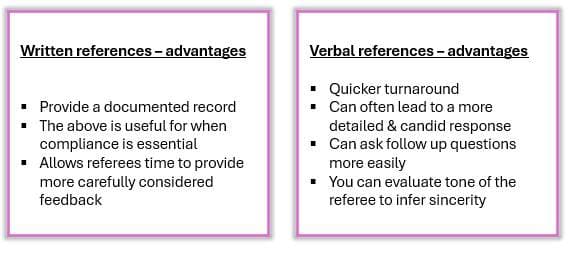
For further detail on references please contact [email protected]