
Agile HR Newsletter August 2025
How should I Start Succession Planning in my SME?
Managing Stress in the Workplace
Human Resources Audit
By Jenny Goulding, Hils Jackett, David Rogers & Chelsey Phillips
Table Of Contents
How should I Start Succession Planning in my SME?
Succession planning in an SME is about safeguarding your company’s future, ensuring continuity, and growing talent internally. Smaller businesses will feel the impact of leadership or key staff changes acutely.
Why Succession Planning Is Crucial for SMEs
- Business Continuity: Prevent disruption if a director, manager, or technical specialist leaves unexpectedly.
- Retention of Knowledge: Avoid losing vital experience and know-how when someone departs.
- Staff Motivation: Demonstrates commitment to career progression and internal development.
- Investor Confidence: A clear succession strategy signals stability and long-term thinking.
- Risk Management: Reduces vulnerability to illness, retirement, or resignation.
How to Develop a Succession Plan
1. Identify Critical Roles
- Focus on leadership, technical, and client-facing positions.
- Ask yourself: “If this person left tomorrow, what would be affected?”
2. Evaluate Internal Talent
- Review staff performance, potential, and readiness to step up.
- Use appraisals, feedback, and development conversations.
3. Create Development Pathways
- Offer training, mentoring, and opportunities to lead projects.
- Encourage cross-departmental experience to broaden skills.
4. Document Key Processes
- Ensure essential tasks and decisions are recorded and accessible.
- Create handover guides or role manuals for continuity.
5. Communicate Openly
- Share the plan with relevant staff to build trust and transparency.
- Clarify expectations and timelines for potential successors.
6. Trial Transitions
- Use temporary role swaps or shadowing to test readiness.
- Adjust the plan based on performance and feedback.
7. Review and Update Regularly
- Revisit the plan annually or after major changes.
- Succession planning should evolve with your business.
Warning Points –
- Don’t overlook non-leadership roles — some technical or client-facing positions are just as critical.
- External recruitment may be necessary if internal candidates aren’t ready — but start building your pipeline early.
- Use succession planning as a retention strategy — staff are more likely to stay if they see a future with you.
If you would like more information on Succession Planning, please contact [email protected]
Managing Stress in the Workplace
What is Workplace Stress?
HSE defines stress as ‘the adverse reaction people have to excessive pressures or other types of demand placed on them.’
Sometimes pressure can be motivating for employees and it can encourage them to push themselves outside of their comfort zone or achieve greater results however, when pressure exceeds a person’s capacity to cope, it becomes damaging.
Stress left unmanaged can lead to burnout, poor performance, increased absence, and mental and physical health issues.
Signs of Workplace Stress
Stress will always look different for everyone, but some common signs include:
- Irritability or an increase in arguments;
- Arriving late for work;
- Difficulty concentrating on tasks;
- Difficult in making decisions;
- Fatigue or trouble sleeping;
- Increased sickness absence;
- Low morale;
- A lack of confidence;
- Drop in performance or motivation.
An Employer’s Responsibility
Employers have a responsibility to ensure the health, safety and wellbeing of their employees. Therefore, employers should be carrying out stress-related risk assessments and acting on them.
HSE provides 6 main areas of work design which can affect stress levels in which employers should assess the risk:
- Demands
- Control
- Support
- Relationships
- Role
- Change
What steps can you take to help manage stress in the workplace?
- Support work-life balance – incl. flexible working, annual leave, the right to switch off etc.
- Encourage open conversations – consider having Mental Health First Aiders.
- Train Line Managers to equip them with the tools to identify stress in their teams.
- Celebrate breaks – encourage your employees to take their lunch breaks and regular breaks throughout the day.
If you would like more information on Managing Stress in the workplace, please contact [email protected]
Human Resources Audit
What is an HR Audit?
An HR audit is a systematic and objective examination of a company’s HR systems, documentation, policies, procedures and practices to ensure legal compliance and best practice, in addition to ensuring efficiency of procedures and alignment with company goals.
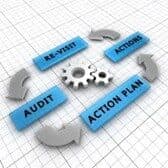
The result of an HR audit is to provide a detailed report with findings and develop an action plan with recommendations for improvement to ensure the HR function contributes effectively to the overall success of the organisation.
An HR audit can cover the following areas but you can pick and choose the areas you wish to audit based on your business and people priorities:
- Legal compliance (including employee documentation & policies & procedures)
- Organisational structure
- Employee relations
- People / performance management
- Training & development
- H&S
- Employee wellbeing
- Recruitment, selection & onboarding
- Metrics (such as diversity & inclusion)
- Data Protection & record keeping
Why your business should consider an HR Audit:
An HR audit can help your business by:
- Uncovering cost-saving opportunities through greater efficiency
- Enhancing the employee experience to boost engagement and retention
- Improving the overall effectiveness of HR practices
- Identifying risks and offering clear guidance on how to mitigate them
- Ensuring HR strategy is aligned with long-term business goals.
If you would like help with your HR audit, please let us know by contacting [email protected]